
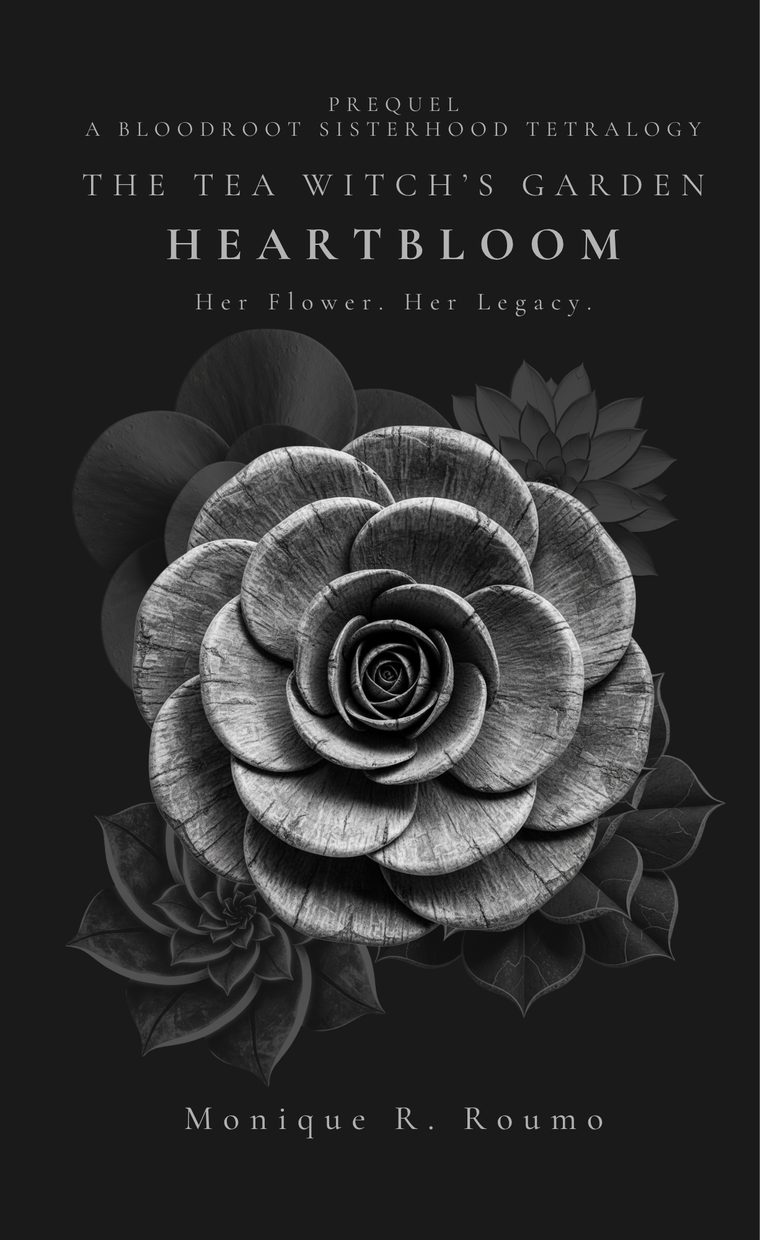
Available now
Prequel · The Bloodroot Sisterhood
The Tea Witch's Garden
Her Flower. Her Legacy.
In a world that demands forgetting, she brewed a rebellion.
Inside the Garden
The Origin

Divine has spent ten years half-alive—hiding her fatal illness, brewing forbidden memory teas, loving her four daughters from behind the glass walls she built after her husband left.
When Warden Kael appears with moonroot bulbs from his mother's grave, their shared rebellion against Rakhmah—the law that makes remembering a crime—awakens something Divine thought dead: the capacity to feel again.
As their dangerous alliance becomes forbidden love, an ancient magic stirs in her garden. The Heartbloom blooms one truth at a time, one permission granted, one wound acknowledged. But each petal that unfurls brings Divine closer to an impossible choice.
Now, with her body failing and the Office closing in, Divine must decide: continue hiding to keep her daughters safe, or risk everything to give them what she never had— permission to grieve, permission to remember, permission to be fully, messily, gloriously themselves.
Because the most dangerous rebellion isn't brewing illegal tea.
It's teaching your daughters that love is worth the cost of feeling it.
Key Elements
- Magic rooted in memory and emotion
- Slow-burn forbidden romance
- Maternal sacrifice & enduring legacy
- A secret rebellion brewed in teacups
- Complex mother-daughter relationships
- A woman learning to feel again after years of numbness
A Taste of the Garden
Excerpt
The first thing Divine did each morning was lie.
She pressed her hand to the base of her throat, a familiar gesture to soothe the place where air sometimes snagged. The words slipped into the seam between night and day, a whispered ritual against the truth her body carried: "Today, I am fine."
The lie fogged the air, a weightless ghost of a promise that dissolved as quickly as it formed, as if the dawn itself refused to bear its witness. The ritual grounded her, though the composure felt borrowed. She knew the truth her body carried—the iron band that cinched tight around her ribs when she moved too quickly, the fine shiver that claimed her hands when she thought no one was watching.
Yet the lie served its purpose. It was a shield. It kept her daughters sleeping peacefully, kept the village from seeing what it could not heal. And it kept the dread from her own eyes, the terror that they might one day see her weakness and know how fragile their world truly was.
Meet the Hearts of the Garden
Characters
Divine Rudo — The Silent Grace Protagonist
A tea witch, healer, and secret rebel. For ten years, Divine has gone through the motions of living—loving her daughters from behind glass, brewing forbidden memory teas out of duty rather than joy, hiding a fatal illness that threatens to steal what little time she has left. When Kael arrives, he awakens something she thought was dead: the terrifying, devastating capacity to feel again.
Motif: The Heartbloom — a sentient flower that blooms only in response to soul-deep truth, grief, or love.
Kael — The Grief Warden Love Interest
An enforcer of Rakhmah—the law that criminalizes prolonged grief—Kael carries his own forbidden secret: seven years of illegally harbored grief for his mother. When he offers Divine moonroot bulbs from his mother's grave, their shared rebellion transforms him from enemy to ally, from ally to something far more dangerous.
His Arc: From enforcer to co-conspirator. From guarded to vulnerable. From duty to love.
The Four Daughters
Yamara — The fierce firstborn, fire given human form. She burns bright and loud, challenging injustice in the public square while secretly wondering if she'll ever be chosen first.
Chisara — The relentless mind, sharp-willed and unyielding. She wields knowledge as both weapon and shield, uncovering truths that could destroy them all.
Mahari — The gentle blade, protector of her twin. She sacrifices her own voice to keep the peace, believing love means making herself small.
Jendayi — The healer's song, the youngest twin. She pours herself out to mend others, not yet understanding the cost of giving without receiving.
The World Beneath the Blossom
The Kingdom of Rakhmah
In this fractured kingdom, grief is regulated by law. Families are permitted seven days to mourn—then forced to forget. The Office of Rakhmah enforces these laws with wardens who count days, not tears. To remember beyond the sanctioned period is treason. To help others remember is a capital crime.
But Divine remembers.
In her hidden garden, she brews memory teas that preserve what the law demands be erased. Her clients grieve differently—they heal, they remember, they carry their loved ones forward. And somewhere beneath the soil, an ancient magic waits.
The Heartbloom
A sentient flower that has slept in Divine's garden for ten years. It blooms only in response to soul-deep truth, grief, or love.
The Emotional Landscape
What This Book Explores
Numbness and Reawakening What happens when you finally let yourself feel again after years of going through the motions?
Forbidden Love Not just romance, but the revolutionary act of loving while dying, of choosing connection when it would be safer to stay alone.
Mother-Daughter Legacy The truths we speak too late. The permissions we fight to give. The love that wounds and heals in equal measure.
Memory as Resistance In a world that demands forgetting, remembering becomes the most dangerous form of rebellion.
Permission To grieve. To remember. To be fully, messily, gloriously yourself.
The Voice of the Garden
"To remember is to love. To forget is to betray love."
The Fine Print
Perfect For Readers Who Love:
Lyrical prose that lingers in your heart
Magic rooted in memory and emotion
Complex mother-daughter relationships
Slow-burn forbidden romance
Sisterhood that feels authentic
Fantasy exploring grief and identity
Themes
- Maternal sacrifice
- Forbidden love
- Memory as resistance
- Complicated grief
- Ancestral magic
- Permission to be whole
Representation
- Black women protagonists
- Intergenerational healing
- Chronic illness representation
- Blended families
- Cultural grief practices
Romance
- Slow-burn
- Emotionally intimate
- Fade-to-black
- Age gap (late 30s/early 40s)
- Mutual caretaking
Content Notes
- Parent death (on page)
- Terminal illness
- Emotional intensity
- Complex family dynamics
- Past abandonment mentioned
The other doors
Read them in any order. Each is a complete novel with its own arc and its own love story. Whichever one you read last is the one that closes the garden.
 Book One
Ironbloom
Yamara
Book One
Ironbloom
Yamara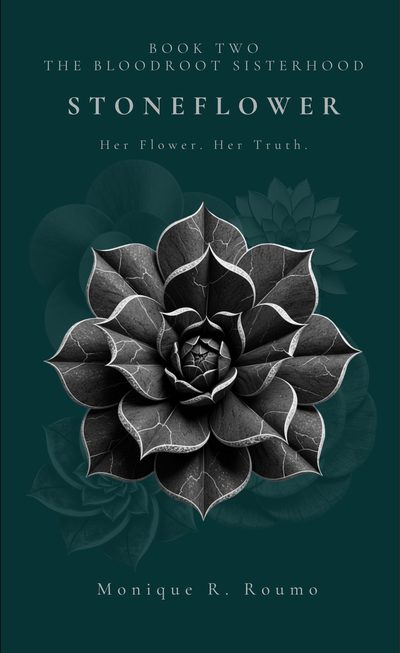 Book Two
Stoneflower
Chisara
Book Two
Stoneflower
Chisara Book Three
Moonpetal
Mahari
Book Three
Moonpetal
Mahari Book Four
Dawnflower
Jendayi
Book Four
Dawnflower
JendayiThe Bloodroot Sisterhood
Join the Sisterhood
New books, release dates, and the occasional letter from the garden. No noise. Unsubscribe whenever you like.